
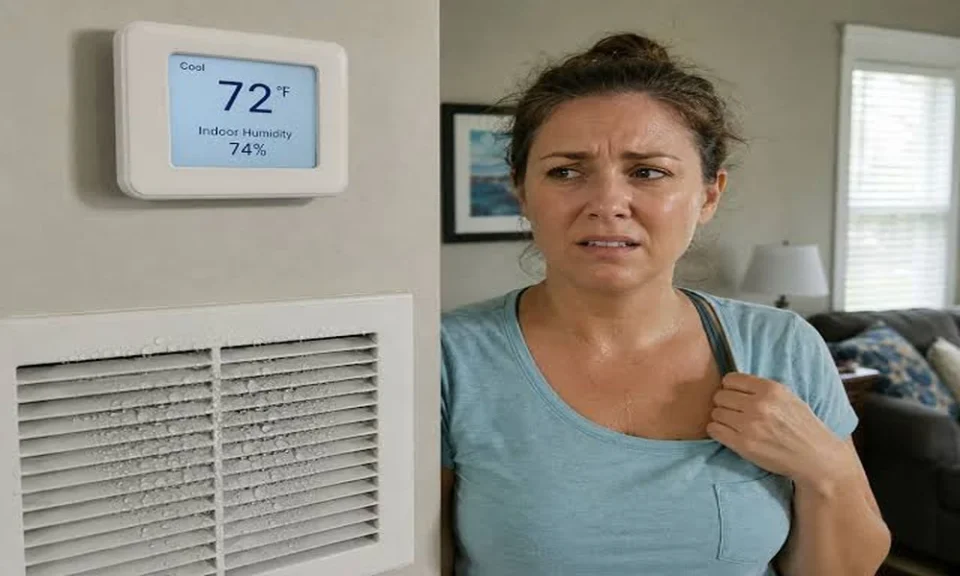
Anyone who has lived through a Central Florida September knows the feeling. The thermostat says 75. The AC is running. Yet the couch cushions feel damp, the bathroom mirror stays fogged long after a shower, and there’s a faint musty smell in the hall closet. Summer should be ending, but the air inside feels heavier than ever.
The reason is that temperature and humidity are two separate problems, and your AC only fixes the second one as a side effect. As it cools, moisture from the air condenses on the cold indoor coil and drains away. Moisture only gets removed when the system runs long enough, and at the right speed, for that to happen. Most comfort guidelines suggest keeping indoor humidity between about 40 and 50 percent. Above 60 percent, mold, dust mites, and that clammy feeling all start to take hold. In late summer and early fall, many Orlando homes sit well above that mark for hours at a time without anyone noticing.
When humidity keeps winning even with the AC running, the problem is usually in how the system is sized, set up, or maintained, and that’s the kind of thing Cool Zone A/C Inc. is set up to diagnose. The Orlando team handles AC, heat pumps, mini splits, and heating, plus whole house dehumidification, filtration, and purification. It installs Daikin and Goodman equipment and serves more than 30 Central Florida communities, from Winter Park and Lake Mary to St. Cloud and Clermont. Financing is available, veterans and first responders get a discount, and the office is open six days a week, so you rarely have to wait until Monday to get help.
To see where moisture actually builds up, it helps to follow a single ordinary day inside a typical house.
6:00 a.m. The air feels cool but not fresh
Overnight, the house needed very little cooling. The AC ran in short bursts, and short bursts barely remove any moisture. An indoor coil takes several minutes of running before condensate actually starts dripping into the drain pan. If the system shuts off before that, much of the water left on the coil simply evaporates back into the house.
That’s why mornings can feel cool and clammy at the same time. A thermostat fan set to “On” instead of “Auto” makes it worse, because the blower keeps pushing air across that wet coil after the compressor stops, blowing moisture straight back into the rooms.
9:00 a.m. The house empties out
The family leaves, and someone raises the thermostat to save money. That makes sense for your bill, but it has a humidity cost. Florida houses are never truly sealed. Humid outdoor air leaks in through recessed lights, attic hatches, dryer vents, and gaps around plumbing. With the AC mostly idle, that moisture builds up in drywall, carpet, and furniture all morning.
A moderate setback, a few degrees rather than turning the system off, usually strikes the best balance. Smart thermostats that track humidity alongside temperature make this much easier to fine-tune.
2:00 p.m. The system finally works hard
Afternoon heat forces long run times, and this is when a well-matched system does its best moisture removal. It is also when an oversized system shows its flaw. A unit that is too big for the house cools the air fast, hits the set temperature, and shuts off before it has pulled out much water. The rooms feel cold but damp, a telltale sign of a system that is too large for the home.
Variable speed and inverter equipment has changed this picture. Instead of blasting on and off, these systems run longer at lower speeds, which keeps the coil cold and draining. That’s a big part of why they have become popular across the Southeast.
4:30 p.m. The storm rolls through
The usual afternoon thunderstorm drops the outdoor temperature by ten degrees or more in minutes. The thermostat is satisfied, and the AC stops running. Outdoor humidity, meanwhile, jumps toward saturation. This is the hour when indoor moisture often spikes the most, even though the house feels pleasantly cooler.
It is also a good time to check the condensate line outside. In Florida, algae grows easily inside these drain lines. A slow or clogged drain can back water into the pan, trip a float switch, and shut the system down, or overflow into a ceiling if no switch was ever installed.
7:00 p.m. The house makes its own weather
Cooking, dishwashing, and showers all add moisture right when the family is home. A few habits help more than most people expect:
- Run bathroom exhaust fans for 20 minutes after showering, and check that they actually vent outside and not into the attic
- Use the range hood even for boiling pasta
- Keep laundry from drying indoors on racks
- Close the door on a steamy bathroom until the fan clears it
11:00 p.m. Deciding whether it’s enough
By bedtime, the house has gone through a full day of moisture swings. If rooms still feel sticky, a few signs point past habits toward the equipment itself:
- Supply vents that sweat or drip
- Dark spots forming around ceiling registers
- A musty smell that comes back soon after cleaning
- Doors and drawers that swell and stick
- A cheap hygrometer showing readings above 55 percent most evenings
Homes that consistently show these signs often benefit from a whole house dehumidifier. It connects to the existing ductwork, keeps humidity steady without overcooling the rooms, and lets the thermostat sit a couple of degrees higher while the house still feels more comfortable. Pairing it with better filtration also helps with the dust and allergens that thrive in damp air.
The bigger lesson
A comfortable Florida home isn’t just a cold one. It’s one where the air stays dry across every hour of the day, from quiet mornings to stormy afternoons. Once you start noticing when the stickiness shows up, the cause is usually easy to spot.
