
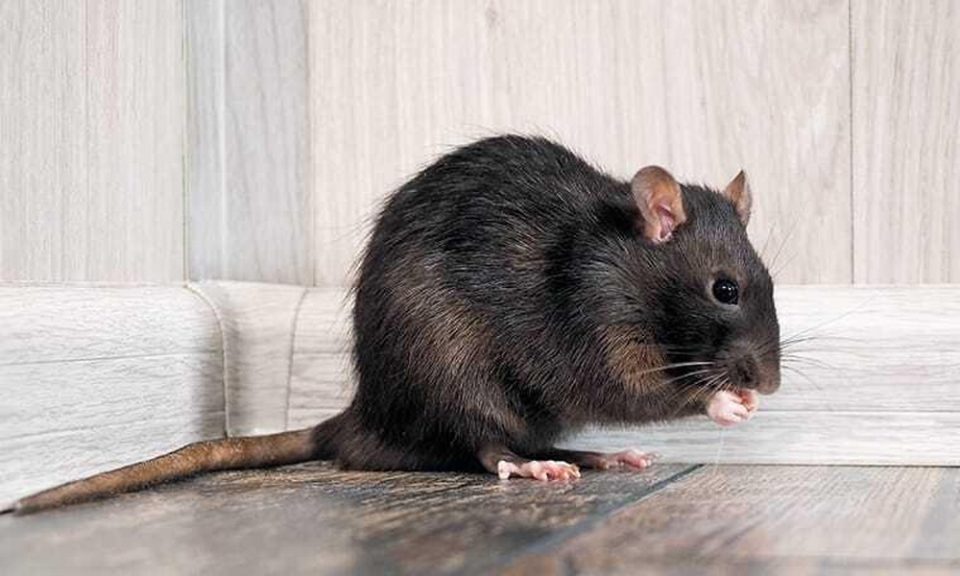
You bought four snap traps at the hardware store, baited them with cheese, set them on the garage floor near where you’ve been hearing the scratching, and three weeks later the bait is gone, the traps haven’t sprung, and the noise in the ceiling is louder than ever. You’re not losing your mind. The advice that went into that trap layout was almost certainly written for the wrong species. The technicians at Main Sail Pest Control walk into this exact scenario across Lake Elsinore, Wildomar, Murrieta, and Menifee every fall, and the underlying problem is almost always the same. The rat in your attic is a roof rat, not a Norway rat, and the species difference is the difference between trapping that works and trapping that wastes your weekend.
Roof Rat or Norway Rat: The Field ID
There are two commensal rat species that infest California homes. They look superficially similar and behave very differently.
The roof rat (Rattus rattus) is slim and athletic. Adults run 6 to 8 inches in body length, with a hairless tail that’s noticeably longer than the body. The fur is smooth, usually dark gray to nearly black with a lighter underside. The snout is pointed. The ears are large, thin, and almost hairless. Adult weight is 6 to 12 ounces. Droppings are about half an inch long, pointed at the ends, banana-shaped.
The Norway rat (Rattus norvegicus) is bulkier. Body length runs 7 to 10 inches, the tail is shorter than the body, and the fur is coarse brown to grayish brown. The snout is blunt and the ears are small. Adult weight is 12 to 24 ounces, sometimes more. Droppings are about three-quarters of an inch, blunt at the ends, shaped like dry raisins.
Tail length relative to body length is the single most reliable identifier. Hold up a phone photo of the trapped rat, compare tail to body, and you have your answer in two seconds.
Why Lake Elsinore Belongs to the Roof Rat
Roof rats thrive in warm, dry, vegetated environments. Norway rats prefer cold-climate cities, dense urban cores, sewers, and commercial properties with grease-trap food sources at ground level. The Inland Empire is roof rat country. UC IPM and decades of California rodent control experience put roof rats as the dominant species across Riverside County’s residential neighborhoods.
The local conditions that favor them:
- Mature landscaping, especially fan palms, queen palms, bougainvillea hedges, ivy on block walls, and dense ground cover
- Citrus and fruit trees in residential yards
- Tile roofs with gaps under and between tiles
- Attached garages with attic spaces above
- Palm fronds left on trees rather than skirted off
- Hillside lots backing up to undeveloped chaparral and scrub
- Detached garages and outbuildings with gaps at rooflines
A roof rat doesn’t need an open door. It needs a low-hanging branch touching the eave, a gap behind the AC line set, a torn roof vent screen, or an unscreened gable vent.
Where the Snap Trap in the Garage Goes Wrong
The hardware-store rat advice was written generically, often based on Norway rat behavior, and it backfires for several specific reasons.
Wrong location is the biggest one. Roof rats spend almost no time on a garage floor. They travel along the tops of walls, through soffits, across rafters and ceiling joists, and along utility runs in the attic. A trap on the slab is a trap in the wrong room. Norway rats forage at ground level. Roof rats don’t.
Wrong bait is the second issue. Cheese is a cartoon trope. Roof rats prefer dried fruit, nuts, peanut butter rolled in oats, and small pieces of fresh fruit. Norway rats lean toward meat, fish, peanut butter, and bacon grease. Cheese works on neither species reliably.
Wrong setup is the third. Roof rats are strongly neophobic, meaning they avoid new objects in their environment for days or even a week. A freshly placed unset trap may not get touched for the first several days. Setting the trap immediately, before the rat has accepted it as part of the landscape, almost guarantees the trap stays unsprung while the bait gets stolen later.
Too few traps is the fourth. A breeding pair of roof rats can produce 20 to 40 offspring in a year. Two traps in a garage corner barely register. Effective trapping uses 8 to 12 traps in active runways for a typical attic infestation.
How Main Sail Pest Control Actually Traps Roof Rats
The professional approach starts with finding the runways before placing a single trap.
A trained technician inspects the attic for grease marks (dark smudges along beams where rats have rubbed against wood), droppings concentrated in specific areas, gnaw marks, urine staining, and disturbed insulation. Rats use the same routes night after night. Find the route, find the trap location.
Traps go on top of beams and rafters where rats actually walk, not on flat insulation where they don’t. Snap traps and T-Rex style traps are positioned with the trigger end facing the wall or beam edge so the rat encounters it on its normal path. Multiple traps spaced 6 to 10 feet apart along an active runway dramatically outperform one or two traps in a “good spot.”
Pre-baiting is used where time and access allow. The traps are placed unset with bait for two to four days, letting the colony habituate to them. Then the traps are set on the same evening across the entire array. The first night usually accounts for the bulk of the catch.
Bait stations are tamper-resistant, secured to a structure, and used outdoors per California Department of Pesticide Regulation requirements. Bait is never scattered loose on the ground.
Exclusion Is the Other Half of the Job
Trapping the rats currently inside doesn’t solve the problem if the access points are still open. The pressure from the surrounding properties, the palm trees, and the wildland edge will refill an attic within weeks of the last trap snapping.
A real exclusion job seals every gap larger than a half inch with materials roof rats can’t gnaw through:
- Hardware cloth (quarter-inch galvanized) over open vents
- Sheet metal or copper mesh stuffed into gaps where AC line sets and plumbing penetrate the structure
- Tile bird stops along the lower row of tile roofs
- Sealed gable vents and ridge vents
- Trimmed back tree limbs so no branch comes within five feet of the roofline
- Skirted palm trees with the dead fronds removed
Foam alone fails. Steel wool alone fails. Chewable materials get chewed.
Stop Buying Traps. Start With an Inspection.
If you’ve already run the snap-trap experiment and the noise overhead is still there, the issue isn’t trap quality. It’s species, placement, and exclusion. The longer the colony has access, the more young are born inside the attic, and the more wiring, ductwork, and insulation get destroyed in the meantime.
The team at Main Sail Pest Control inspects attics, identifies entry points, runs proper trapping protocols built for roof rats specifically, and handles the exclusion work that keeps the next generation outside. Reach out for a free estimate on a rodent service plan sized for your property before the next storm pushes another cohort in from the hillside.
