
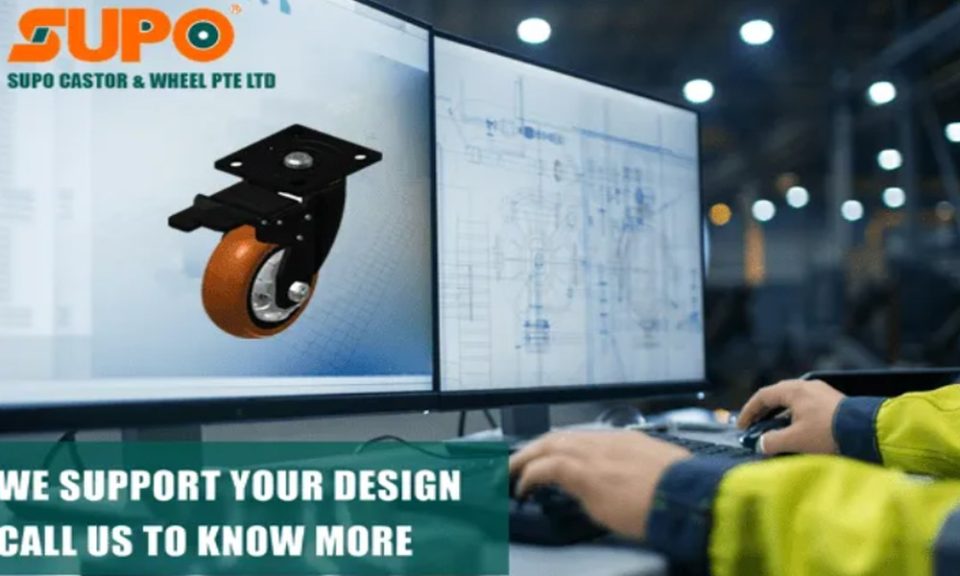
Industrial mobility systems play a critical role in ensuring efficiency, safety, and reliability across manufacturing, warehousing, and material handling environments. One of the most important yet often overlooked components of these systems is the PU castor wheel. The choice of wheel material directly affects load handling, movement smoothness, durability, and long-term operational performance.
A PU castor wheel is widely recognised for its ability to balance strength and flexibility, making it suitable for demanding industrial applications. By understanding how polyurethane performs under real-world conditions, businesses can make informed decisions that support productivity and reduce maintenance costs. This article explores the performance benefits that make polyurethane castor wheels a preferred solution for industrial mobility.
Understanding What A Polyurethane Castor Wheel Is
A PU castor wheel is a wheel manufactured using polyurethane, a synthetic elastomer known for combining rubber-like elasticity with plastic-like strength. Unlike traditional rubber or hard plastic wheels, polyurethane delivers a unique balance between load-bearing capacity and surface protection.
Polyurethane wheels are typically bonded to a rigid core, allowing them to support substantial loads without excessive compression. This construction enables the PU castor wheel to perform consistently under both static and dynamic loads. As a result, it is commonly used in industrial carts, trolleys, machinery bases, and material handling equipment.
What distinguishes polyurethane from other materials is its resistance to wear, chemicals, and environmental stress. These properties allow a PU castor wheel to maintain its shape and performance over extended periods, even in challenging industrial conditions.
Load Bearing Performance And Structural Strength
One of the primary performance advantages of a PU castor wheel lies in its exceptional load-bearing capability. Polyurethane offers high tensile strength, allowing the wheel to carry heavy loads without cracking or flattening over time. This structural integrity is particularly important in environments where equipment remains stationary for extended periods.
Unlike softer materials that may deform permanently under weight, a PU castor wheel distributes loads evenly across its surface. This reduces stress concentration and supports smoother movement when equipment is set in motion. The result is improved handling efficiency and reduced strain on supporting structures.
In applications involving frequent starts, stops, and directional changes, the strength of polyurethane helps maintain wheel performance. This reliability makes the PU castor wheel suitable for industrial systems where consistent load handling is essential for operational continuity.
Durability And Wear Resistance In Industrial Environments
Durability is a defining characteristic of a PU castor wheel, particularly in high-traffic industrial settings. Polyurethane exhibits strong resistance to abrasion, tearing, and surface wear, even when exposed to rough flooring or repetitive rolling cycles. This durability translates into longer service life compared to many alternative wheel materials.
In addition to mechanical wear resistance, a PU castor wheel performs well in environments exposed to oils, greases, and common industrial chemicals. These substances often degrade rubber wheels over time, leading to cracking or loss of elasticity. Polyurethane maintains its physical properties, ensuring consistent performance.
By reducing the frequency of wheel replacement, a PU castor wheel contributes to lower maintenance costs and fewer operational disruptions. This makes it a cost-effective solution for long-term industrial use.
Smooth Rolling Performance And Floor Protection
A PU castor wheel is designed to provide smooth and controlled rolling, even under heavy loads. The material’s elasticity allows it to absorb minor surface irregularities, reducing vibration and rolling resistance. This smooth movement improves maneuverability and makes equipment easier to control.
At the same time, polyurethane is firm enough to prevent excessive drag. This balance ensures that a PU castor wheel delivers efficient movement without compromising stability. Noise reduction is another benefit, as polyurethane dampens sound more effectively than hard plastic wheels.
Floor protection is also a key performance advantage. A PU castor wheel is less likely to mark, scratch, or damage flooring surfaces. This makes it suitable for facilities where maintaining floor condition is a priority, such as warehouses, production areas, and clean industrial environments.
Environmental And Temperature Performance Stability
Industrial environments often expose equipment to fluctuating temperatures and humidity levels. A PU castor wheel performs reliably across a wide temperature range, maintaining its structural integrity and elasticity in both warm and moderately cold conditions.
Unlike materials that become brittle or excessively soft when temperatures change, polyurethane remains stable. This consistency ensures predictable rolling performance and load handling. Moisture resistance is another important factor, as polyurethane does not readily absorb water.
The environmental stability of a PU castor wheel allows it to be used confidently in indoor and semi-outdoor industrial settings. This reliability supports long-term planning and reduces concerns about premature material degradation.
Operational Efficiency Benefits In Daily Industrial Use
The performance characteristics of a PU castor wheel directly contribute to improved operational efficiency. Reduced rolling resistance means less force is required to move heavy equipment, which lowers physical strain on workers and enhances workplace ergonomics.
Improved maneuverability also allows for more precise positioning of carts, trolleys, and machinery. This is especially valuable in confined spaces where control and accuracy are essential. Over time, the consistent performance of a PU castor wheel supports smoother workflows and minimizes downtime caused by wheel failure.
By enhancing movement efficiency and reducing maintenance demands, polyurethane castor wheels play a meaningful role in optimising daily industrial operations.
Common Industrial Applications That Benefit From Polyurethane Castor Wheels
A PU castor wheel is widely used across various industrial applications due to its balanced performance profile. Common use cases include:
- Warehousing and logistics equipment requiring frequent movement
- Manufacturing and assembly line carts exposed to continuous use
- Material handling trolleys carrying heavy or uneven loads
- Industrial storage systems that demand stability and floor protection
These applications benefit from the durability, load capacity, and smooth rolling performance that polyurethane provides. The adaptability of a PU castor wheel makes it suitable for both light and heavy industrial duties.
Why Material Choice Matters When Selecting Industrial Castor Wheels
Selecting the correct wheel material is essential for achieving optimal performance and longevity. A PU castor wheel offers advantages that bridge the gap between soft rubber wheels and rigid plastic alternatives. While rubber prioritises shock absorption and plastic emphasises hardness, polyurethane delivers both strength and resilience.
Material choice affects not only movement efficiency but also safety, maintenance schedules, and overall equipment lifespan. By choosing a PU castor wheel, businesses align their mobility systems with the demands of industrial environments where reliability and consistency are critical.
Understanding these material-driven performance differences enables more informed decision-making and supports long-term operational success.
Enhancing Industrial Mobility With The Right Wheel Choice
Choosing the right castor wheel material has a direct impact on efficiency, safety, and durability in industrial operations. The PU castor wheel stands out for its ability to handle heavy loads, resist wear, protect floors, and maintain stable performance across varying conditions.
For organisations seeking dependable industrial mobility solutions, working with a trusted supplier is essential. Supo Castor & Wheel provides a range of industrial castor wheel solutions designed to meet demanding operational requirements.
Find out more about their solutions by visiting their website now!
Frequently Asked Questions
What makes a polyurethane castor wheel different from rubber wheels?
A PU castor wheel combines elasticity with high load-bearing strength, offering better durability and wear resistance than most rubber wheels while still protecting flooring surfaces.
Is a polyurethane castor wheel suitable for heavy industrial loads?
Yes, a PU castor wheel is designed to support heavy static and dynamic loads without permanent deformation, making it suitable for demanding industrial applications.
Can a polyurethane castor wheel be used on sensitive flooring?
A PU castor wheel is less likely to mark or damage floors compared to harder materials, making it suitable for environments where floor protection is important.
How long does a polyurethane castor wheel typically last?
The lifespan of a PU castor wheel depends on usage and environment, but its abrasion and chemical resistance generally result in longer service life than rubber alternatives.
Are polyurethane castor wheels suitable for both indoor and outdoor use?
A PU castor wheel performs well in indoor and semi-outdoor environments, offering resistance to moisture and stable performance across common industrial temperature ranges.
