
Introduction
Clear communication is one of the most important elements of any successful job site. Whether crews are installing utilities, grading land, laying foundations, or managing landscaping projects, everyone depends on accurate information to avoid mistakes. On busy sites where multiple teams work simultaneously, verbal instructions alone are not enough. Noise, distance, and changing conditions can quickly create confusion.
This is where visual marking systems play a powerful role. Color coded materials allow teams to communicate instantly without stopping work to clarify instructions. A clearly marked boundary, hazard zone, or underground utility path reduces uncertainty and keeps projects moving forward safely.
When color standards are used consistently, job sites become more organized, efficient, and compliant with safety regulations. In this article, we explore why standardized color systems matter, how they are used in real world settings, and how contractors can implement them effectively.
The Role of Visual Marking Systems in Outdoor Work
Outdoor environments are unpredictable. Wind, dust, rain, equipment noise, and shifting terrain all make communication more challenging. Visual marking systems help overcome these barriers by providing constant, visible reference points that remain in place regardless of noise or distance.
Why Written Notes Are Not Enough
While documentation is essential, it is not always practical in the field. Printed plans may not reflect real time adjustments. Workers cannot carry blueprints everywhere on large sites. Even digital systems require devices that may not be accessible in all conditions.
Visual markers fill that gap by offering immediate clarity.
Advantages of Visual Identifiers
- Instant recognition from a distance
- No reliance on verbal explanation
- Reduced risk of misinterpretation
- Better coordination between teams
- Improved hazard awareness
Industry Examples
- Survey crews marking excavation boundaries
- Utility teams identifying underground lines
- Landscapers outlining irrigation routes
- Road crews designating equipment paths
In each scenario, color coding simplifies communication and reduces the likelihood of costly mistakes.
Understanding Industry Color Standards
Color coding is not random. In many industries, standardized color assignments help ensure consistency across projects and locations. These standards allow workers to move between job sites while understanding markings immediately.
Common Utility Color Assignments
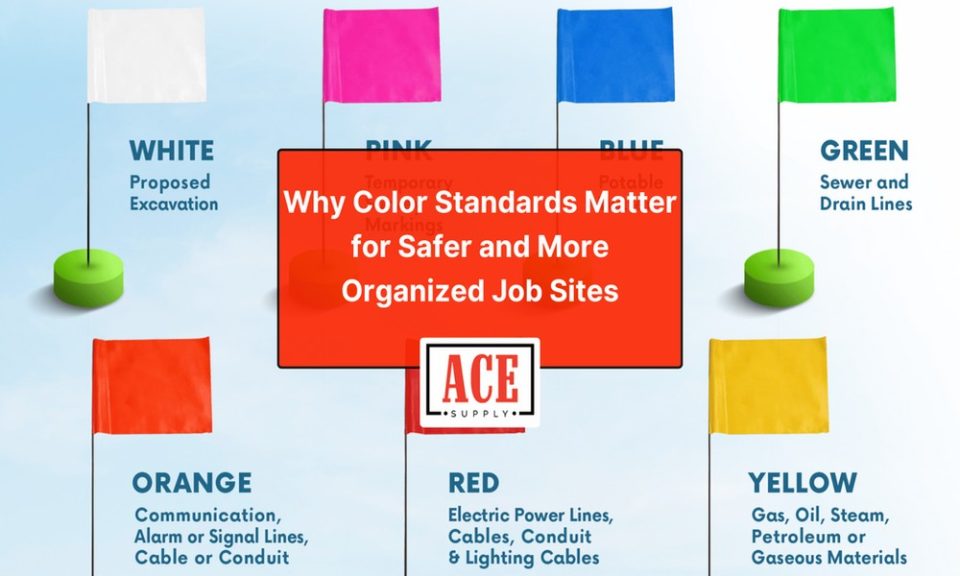
While exact standards may vary slightly by region, typical color meanings include:
- Red for electrical power lines and cables
- Yellow for gas, oil, or steam lines
- Blue for potable water systems
- Green for sewer and drain lines
- Orange for communication and signal lines
- White for proposed excavation areas
These consistent associations prevent confusion and improve compliance with safety guidelines.
For a deeper breakdown of standardized meanings and how they are applied in the field, many professionals refer to resources that explain flagging tape color meaning in detail. One helpful guide can be found here: flagging tape color meaning.
Why Standards Exist
Standardization protects workers and property. When everyone understands what a specific color represents, crews can:
- Avoid digging into hazardous areas
- Identify safe entry points
- Prevent damage to underground infrastructure
- Reduce liability risks
Consequences of Inconsistent Marking
When color systems are not followed properly, the risks increase significantly:
- Excavation errors
- Utility strikes
- Equipment damage
- Project delays
- Increased insurance claims
Consistency is not optional. It is a core part of safe project management.
Practical Applications of Color Coded Tape on Job Sites
Color coded tape serves a wide range of purposes beyond marking underground utilities. Its flexibility and visibility make it valuable for both short term and long term tasks.
Temporary Boundary Marking
Tape can be tied to stakes, fencing, or nearby structures to indicate:
- Work zones
- Restricted access areas
- Equipment staging locations
Hazard Identification
Bright tape quickly draws attention to:
- Open trenches
- Uneven terrain
- Drop offs or unstable ground
- Temporary structural supports
Equipment Path Designation
Heavy equipment operators benefit from clear guidance. Marked routes reduce congestion and improve safety by directing traffic flow.
Material Staging Zones
Color coded tape can help organize materials, ensuring different teams store supplies in designated areas. This prevents clutter and improves efficiency.
Benefits of Color Coded Tape
- Lightweight and easy to install
- Highly visible in various weather conditions
- Cost effective for large scale use
- Simple to remove or replace as needed
- Adaptable to changing project layouts
Because of its versatility, color coded tape remains one of the most widely used marking tools across construction and landscaping industries.
Best Practices for Implementing a Site Wide Color System
Simply purchasing colored tape is not enough. Successful implementation requires planning and training.
Step 1: Establish Clear Definitions
Create a written document that defines what each color represents on the site. Align this system with recognized industry standards whenever possible.
Step 2: Train All Teams
Before work begins, review the color system with every crew member. Make sure subcontractors understand the same definitions.
Step 3: Post Visible Reference Charts
Display color charts in common areas such as site trailers or equipment storage areas.
Step 4: Maintain Consistency
Use the same colors throughout the project. Avoid introducing new meanings unless absolutely necessary.
Step 5: Conduct Daily Reviews
Inspect markings regularly to ensure they remain visible and accurate. Replace damaged or faded tape promptly.
Following these steps builds confidence among workers and minimizes miscommunication.
Choosing Durable and Reliable Marking Supplies
Quality matters when selecting marking materials. Cheap or low quality products may fade quickly, tear in strong wind, or lose visibility under sunlight.
When evaluating supplies, consider the following factors:
Weather Resistance
- UV resistance for prolonged sun exposure
- Water resistance to withstand rain
- Durability in high wind conditions
Visibility
- Bright, saturated colors
- Reflective options for low light environments
- Wide tape widths for enhanced visibility
Ease of Use
- Simple tearing or cutting
- Lightweight rolls
- Compact storage options
Storage and Handling
Proper storage prevents premature fading or tangling. Keep tape in a dry location away from direct sunlight when not in use.
Professionals looking for dependable marking materials often rely on trusted suppliers such as Ace Supply USA. Their inventory includes a range of site marking products designed to meet industry demands.
In addition to tape, many projects benefit from pairing visual tape with other marking tools such as marking flags for enhanced visibility in grass, soil, or gravel.
Selecting high quality supplies ensures that markings remain clear throughout the life of the project.
The Long Term Value of Organized Marking Systems
A structured color system does more than prevent accidents. It improves overall project performance.
Increased Efficiency
Workers spend less time clarifying instructions and more time completing tasks. Clear boundaries eliminate guesswork.
Improved Accountability
Visible markers provide documentation of layout decisions. If questions arise later, crews can reference physical indicators.
Enhanced Professionalism
Well organized sites reflect strong management. Clients and inspectors notice when projects are clearly marked and easy to navigate.
Reduced Stress for Crews
When workers understand exactly where to operate, stress levels decrease. This contributes to better morale and improved productivity.
Conclusion
Color standards play a vital role in maintaining safe and organized job sites. In fast paced outdoor environments, visual systems communicate critical information quickly and clearly. From identifying underground utilities to outlining work zones, consistent color coding reduces confusion and protects both workers and infrastructure.
By establishing clear definitions, training teams, and selecting durable supplies, contractors can build a reliable marking system that supports every phase of a project. Simple tools such as color coded tape and complementary markers create structure in environments that might otherwise feel chaotic.
When used correctly, these visual communication systems help crews work smarter, safer, and more efficiently. Over time, the benefits compound, leading to fewer errors, improved compliance, and stronger project outcomes.
